Approfondimenti
What Makes a Note Worth Keeping? A Simple Explainer for Personal Archives
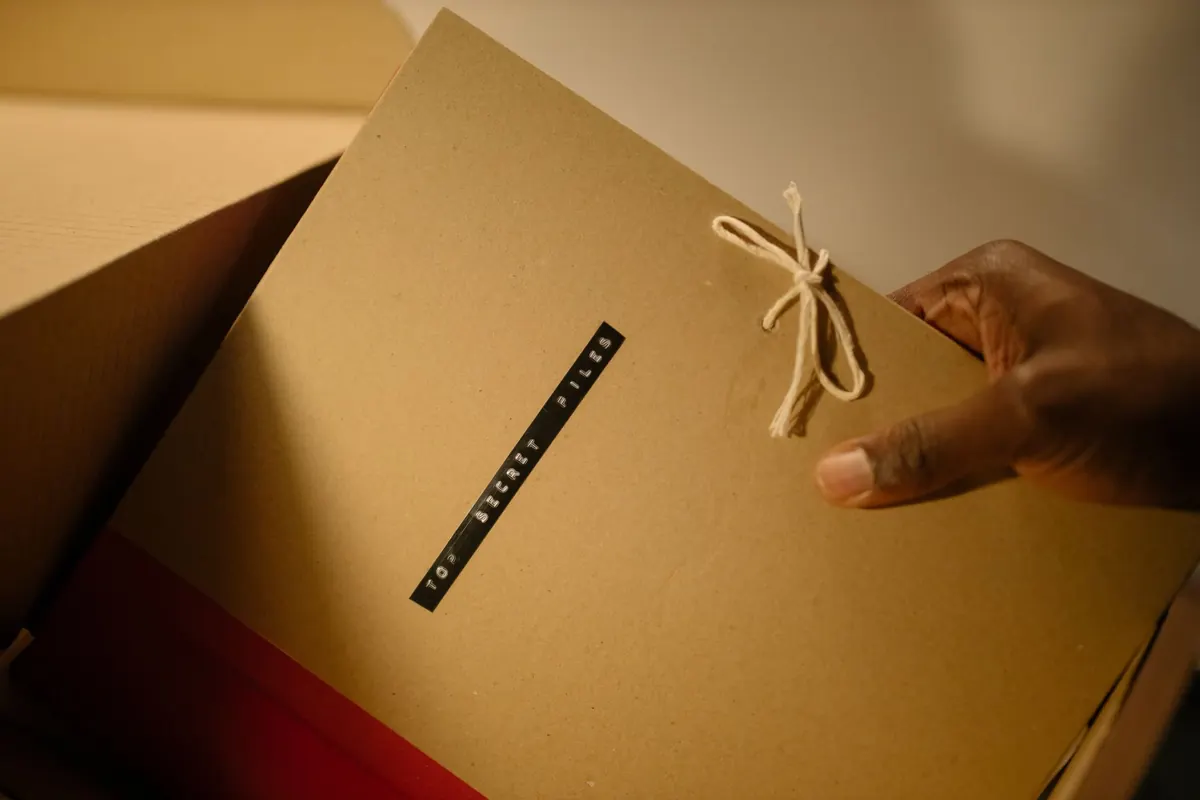
There is a particular moment, usually on a rainy Sunday with a cardboard box open on the floor, when a pile of old notes asks you a question you would rather avoid: what exactly am I supposed to do with all of this? The sticky note with half a phone number. The notebook page where you wrote down a name at a party. The index card with a sentence you copied from a book because it struck you at the time and now reads like a stranger's handwriting.
Most advice about personal archives jumps straight to storage — folders, labels, apps. But storage is the easy part. The real work is deciding what deserves to survive, and being willing to decide. What follows is a plain set of criteria: not rules handed down, just the tests that tend to hold up when you apply them to your own paper and files.
The First Test: Does the Note Still Have Work to Do?
A note is a tool before it is a memory. It exists because something needed remembering, deciding, or figuring out. So start there: is the task still alive?
Take the note that reads "ask Marta about the invoice." If the invoice was settled in March, the note is no longer a tool. It has become a receipt — proof that a small thing once needed doing. That is not nothing, but it rarely earns a place in the archive. If, on the other hand, the question is still open, the note is doing its job and should be somewhere you will actually look.
This single test clears out more paper than any filing system. Completed errands, addresses you have since saved properly, travel directions to a place you have already been — all of it has finished its work. Thank it and move on.
Three Questions That Sort Almost Everything Else
For notes that are not obviously finished, ask three questions in order. The first answer that feels like a yes decides the outcome.
- Would I use this again? A recipe, a list of books, a conversation to follow up on, a sketch you might return to. Reusable material belongs in the archive, organised by how you would search for it.
- Would I regret losing it? Not "do I like touching it" — that is a different, weaker question. Ask whether its absence would leave a gap. Letters, a page of notes from a difficult year, the first rough plan for something you built. These are artifacts, and they deserve proper storage rather than a shoebox.
- Would future-me look for this? If you would search for it and be annoyed it was gone, keep it. If you cannot picture any version of yourself looking, you have your answer.
Notice what is missing from that list: how much space it takes up, how long you have had it, how guilty you feel about throwing away something someone gave you. Those are feelings about the note, not facts about its value.
Tell the Difference Between a Record and a Relic
Records and relics get mixed together because they live in the same drawer, but they need different treatment. A record is something you consult: the notes from a project, a list of measurements, a summary of a conversation with your landlord. A relic is something you keep because it carries a moment: a handwritten card, a ticket stub with a date on it, a note you wrote to yourself at three in the morning.
Records should be dated, labelled, and grouped by topic so you can find them. Relics should be few, and stored somewhere that is not in the way of daily life. The mistake most people make is keeping relics in the working files, where they interrupt every search, and keeping records in the sentimental box, where they slowly become meaningless. Separate the two and both get easier.
Dates Make the "Maybe" Pile Possible
Some notes are genuinely undecided, and pretending otherwise wastes time. Give them a container instead of an answer. Put the not-sure pile in an envelope or a folder, write the date on it, and set a review date — six months, a year, whatever suits you. Then do not open it until that date.
When the date arrives, the decision is usually easy. If you have not thought about the contents once, they were never doing any work. If one item surfaces in your mind before you even open the envelope, that is the one worth keeping. A dated envelope is a decision deferred, not avoided, and that distinction matters.
A Sorting Method You Can Finish in One Sitting
Set aside ninety minutes, clear a table, and resist reading. Skim, decide, move. Work in this order:
- Empty the container completely. Half-sorted piles have a habit of staying half-sorted for years.
- Make four piles: Now, Archive, Maybe, Out. Now means the note has an active task attached. Archive means keep, with a place. Maybe gets the dated envelope. Out is paper recycling or a shredder if it holds anything personal.
- Date everything that survives. A pencil note in the corner is enough. Undated paper becomes impossible to judge a decade later, and a single date can rescue an otherwise mysterious page.
- Label the Archive pile by what you would search for. "Kitchen measurements" beats "Misc 2019." Write it as you would say it out loud.
- Deal with Maybe last, and stop deliberating. Anything you have picked up and put down three times goes in the envelope, not back in the drawer.
If you only get through the Now pile, you have still improved your week. The rest can wait for the next session.
Give Kept Notes a Way Back In
Keeping something is only half the job. A note nobody can find has functionally been thrown away, just more slowly. Two habits make the difference. First, keep a single index page — paper or digital — listing what is in each folder, updated when you add something. It takes a minute and saves an hour. Second, review twice a year, at moments you will actually remember, such as the change of seasons or the week you sort your paperwork. Open the folders, check the index, and ask whether anything has finished its work since last time.
Resist the urge to build an elaborate system before you have anything in it. A plain box with six labelled folders, kept current, beats a beautiful taxonomy you abandon in a month.
Start With One Drawer
You do not need to solve your entire archive this weekend, and trying to is the fastest way to keep everything. Choose one drawer, one box, one folder on your desktop. Apply the first test — does this still have work to do — and let that clear the easy half. Date what remains. Put the genuine undecideds in an envelope with a review date written on the front. Then close the drawer and get on with your day.
Do that three or four times over a few months and you will notice something change: the notes you kept are the ones you actually reach for, and the rest no longer takes up room in your head. That is what a personal archive is for. Not completeness, but a small, honest collection you can still use.
Photo: cottonbro studio / Pexels
Related Articles